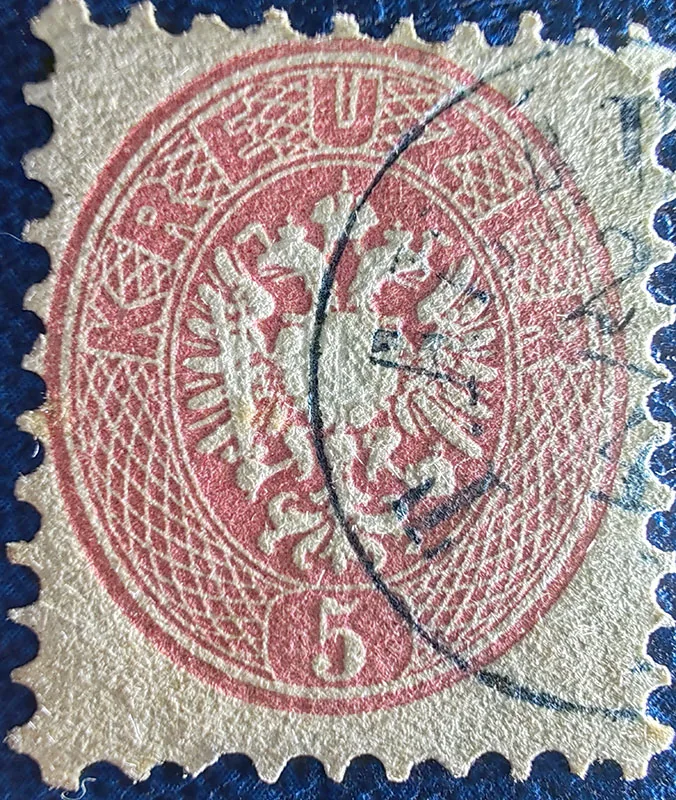
Embossing is a distinctive printing technique generally classified as a form of relief printing. It does not necessarily require ink, because the design is created by raised areas in the paper; in stamp production it is therefore usually used as an additional decorative or security element.


During printing, the paper is placed between a recessed negative die and a raised positive counter-die. Under pressure, the paper permanently takes on the relief formed by the two surfaces. In stamp production, the printing plate naturally contains as many dies as there are stamp positions on the sheet, with an equal number of precisely aligned counter-dies forming the complete embossing tool. Any coloured parts are printed by conventional relief printing, or letterpress. On stamps produced in this way, the central motif is often embossed while the frame is printed in colour.


Stamps of this type were used in Hungary during the Austrian Post in Hungary period from 1858 until the Compromise of 1867. The raised surface of an embossed stamp remains clearly perceptible even after soaking, while the inked areas stay flat. Historically, embossing was used mainly to make stamp forgery more difficult; today it is employed chiefly as a special decorative effect, because embossed paper gives a stamp an elegant appearance.