
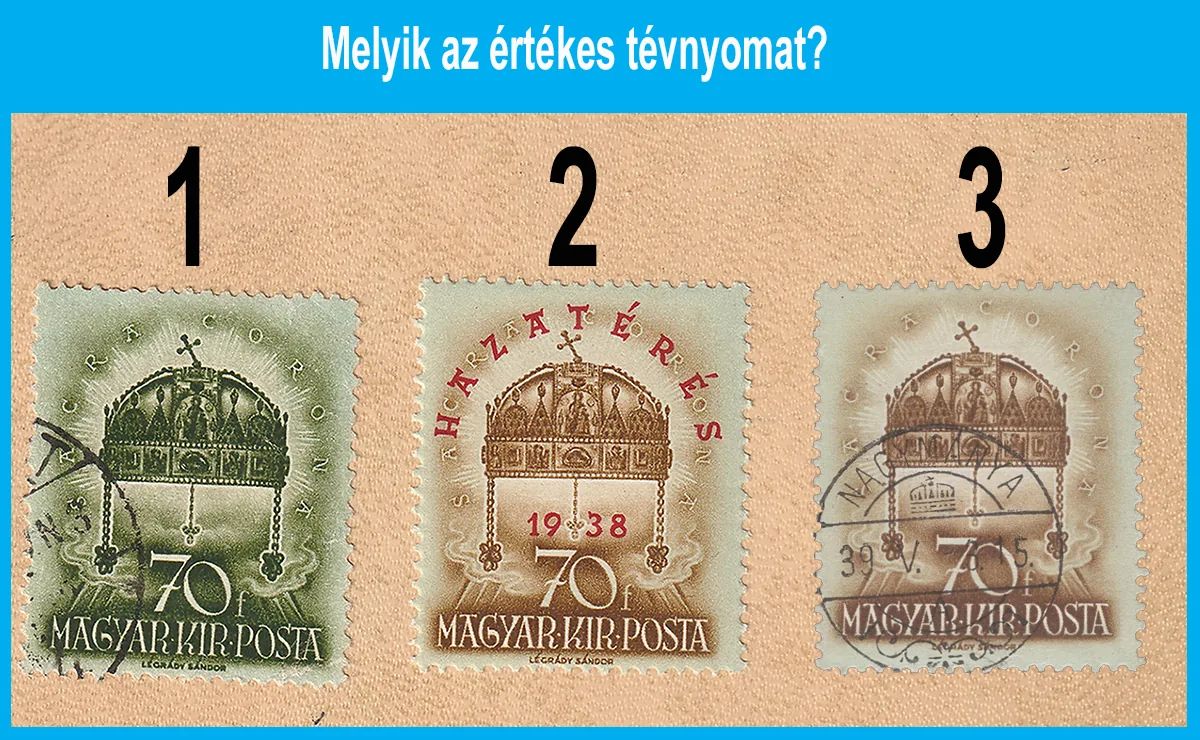
The stamps above have caused a great deal of confusion. When less experienced collectors see pictures of a valuable major error, their eyes immediately light up because they think the same stamp is hiding in their album. To clear up the confusion, let us look at the story of all three; perhaps that will make them easier to identify later.
|
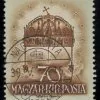
1At the suggestion of the Prince Primate, the Hungarian Post issued a 14-denomination series designed by Sándor Légrády for the Saint Stephen Year marking the 900th anniversary of the king’s death. The first 13 values depict notable events from Saint Stephen’s life and reign. The olive-green 70-fillér value, however, shows the royal crown in its present form surrounded by a halo, with the inscription SACRA CORONA arranged around the edge. More than 3.3 million examples entered circulation, so beautiful though it is, it is not a rarity. |
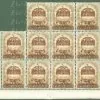
|

|
2On 2 November 1938 the First Vienna Award returned 12,000 km2 of territory detached at Trianon from Czechoslovakia to Hungary, together with a population of 869,000. To mark the occasion, the postal administration issued a commemorative pair using the 20- and 70-fillér designs from Sándor Légrády’s Saint Stephen series. The designs were the same as before, but the earlier red of the 20-fillér value was changed to brownish red, while the olive-green 70-fillér impression was replaced by brown . Both stamps received the inscription HAZATÉRÉS 1938. The 20-fillér value was issued in 4.4 million examples and the 70-fillér in 1.4 million, so these stamps are not rarities either. |
|

|
3In 1938, however, a collector discovered on a postal item received from Nagymánya that the brown 70-fillér stamp was missing the HAZATÉRÉS 1938 inscription. It was subsequently established that one sheet had accidentally missed the HAZATÉRÉS 1938 inscription printed in the third pass, probably because it had stuck to another sheet. It was then sent to the post office at Nagymánya in the recently returned Upper Hungary territory, where 62 stamps were used. The postal administration withdrew the remaining 38: 14 were given away for protocol purposes and a sheet of 24 went to the Stamp Museum. That sheet is a unique philatelic object and part of Hungary’s national assets, so it can never enter the market. Its value is impossible to assess; experts suggest that if it could be sold, it might be worth around half a billion forints. |
|

The similar appearance of these stamps misleads many collectors. Confusion is also encouraged by the way the error entered popular usage and catalogues as a stamp “missing the HAZATÉRÉS overprint”. Strictly speaking, however, this is not an overprint. The inscription HAZATÉRÉS 1938 was not added to the olive-green 70-fillér stamp of the Saint Stephen series; instead, a stamp with the same design but a different base colour received the red HAZATÉRÉS 1938 inscription in a third printing pass. The valuable error is therefore not a missing overprint but a missing colour or printing phase. Several other errors produced in this way can be found on our website.



So, to summarise:
- If it is olive green, it is not worth millions. (About 4–500 forints mint never hinged, maximum 10 forints used.)
- If it is brown and bears the inscription “HAZATÉRÉS 1938”, it is not worth millions either. (About 150–2000 forints mint never hinged, maximum 20 forints used.)
- If it is brown and does not bear the inscription “HAZATÉRÉS 1938”, that is the genuine rarity worth millions.