
Knowledge Base

← Back to home

Plate Flaw

2024. 01. 30.

A plate flaw is one of the most common printing varieties. It is a recurring feature caused by a defect, damage or wear in the printing plate and appears consistently on stamps printed from the same affected plate position.

Lemezhiba az 1955. Bartók Béla sorozat 1 forintos bélyegén, 46. ívhely
Plate flaw on the 1-forint value of the 1955 Béla Bartók issue, sheet position 46

On stamps printed in large quantities, the printing plate may gradually wear or become damaged during use. A plate flaw therefore appears only on sheets printed while the defective plate or printing surface was in use. As the damage or wear develops, several progressive states of the same flaw may sometimes be identified.

Tarajos réce lemezhiba, 1956. Magyarországi kutyafajták 1 Ft, 2. ívhely
“Tufted Duck” plate flaw – 1956 Hungarian Dog Breeds 1 Ft, sheet position 2

Once a flaw was noticed, printers often attempted to repair the plate, but traces of the repair could themselves remain visible on later impressions. The development of a plate flaw can therefore sometimes be followed from the original damage through more advanced states to a repaired state. Defects or retouches on a master plate may also be carried over to duplicate working plates, making this a particularly interesting field of study on classic issues.
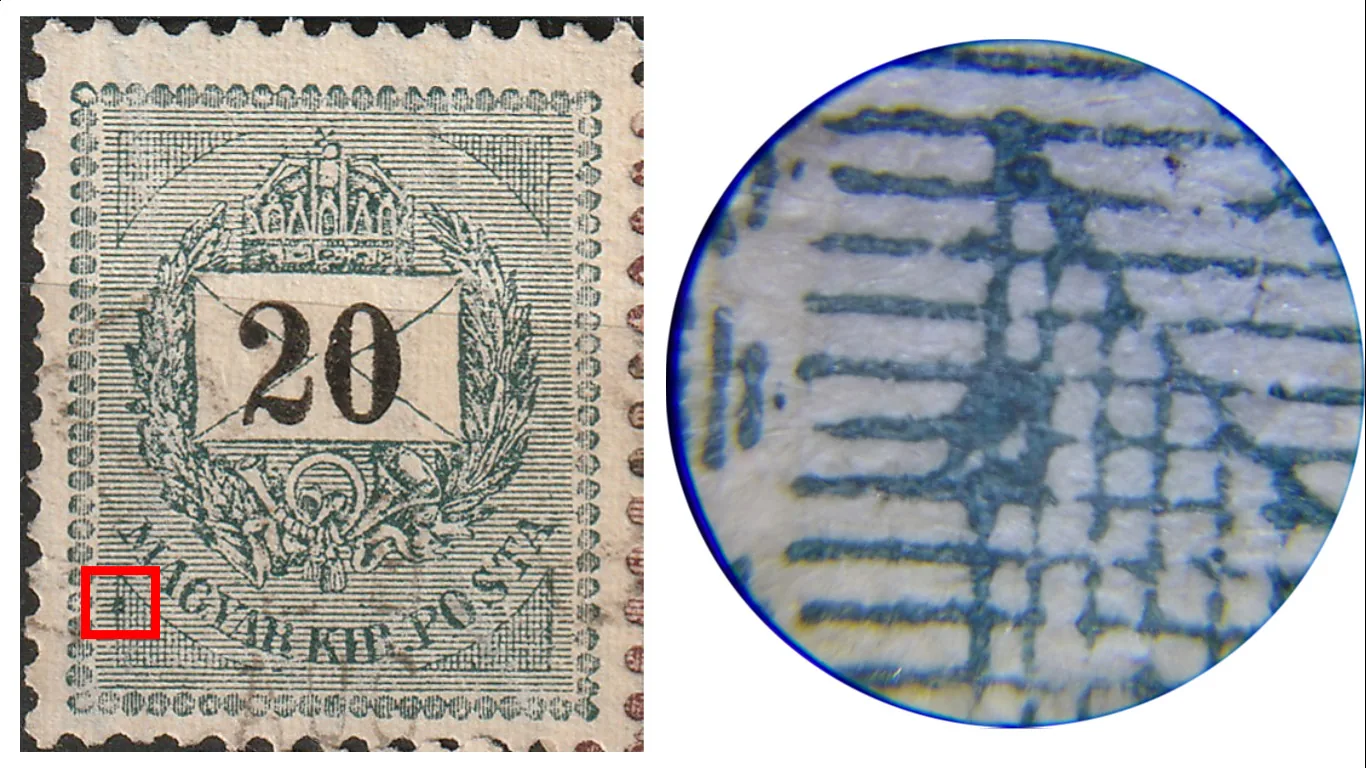
Lemezhiba 1889. Feketeszámú elektrotíp krajcároson
Plate flaw on an 1889 Black-Numeral electrotype Krajcár stamp
1915. Hadisegély 5 K – pont a K betű alatt
1915 War Charity 5 K – dot below the letter “K”. A recurring plate flaw on the 5-korona Turul value and its overprints.
1951–1953. Épületek I 1,78 Ft lemezhiba
1951–1953 Buildings I – on stamp 90 of the sheet, the denomination appears as 1.78 Ft instead of 1.70 Ft. Although it resembles a typesetting error, it is actually caused by a plate flaw.
ADATVÉDELEM

Cookie-beállítások

A választást kizárólag ebben a böngészőben, helyi tárhelyen őrizzük. A Bélyegbarát nem hoz létre hozzájárulási cookie-t.