
Offset printing is a planographic printing process and one of the most widely used methods in modern stamp production. The process normally uses thin aluminium printing plates. The inked image is transferred first from the plate to an intermediate rubber blanket and then from the blanket to the paper. Because the rubber blanket adapts to minor irregularities in the surface of the paper, it produces a smooth and even impression.

In multicolour printing, each colour requires a separate plate and printing unit. The image and text areas of the plate accept the oil-based ink, while a thin film of water on the non-image areas repels it. Offset stamps may be printed with spot colours or by screened process-colour printing.

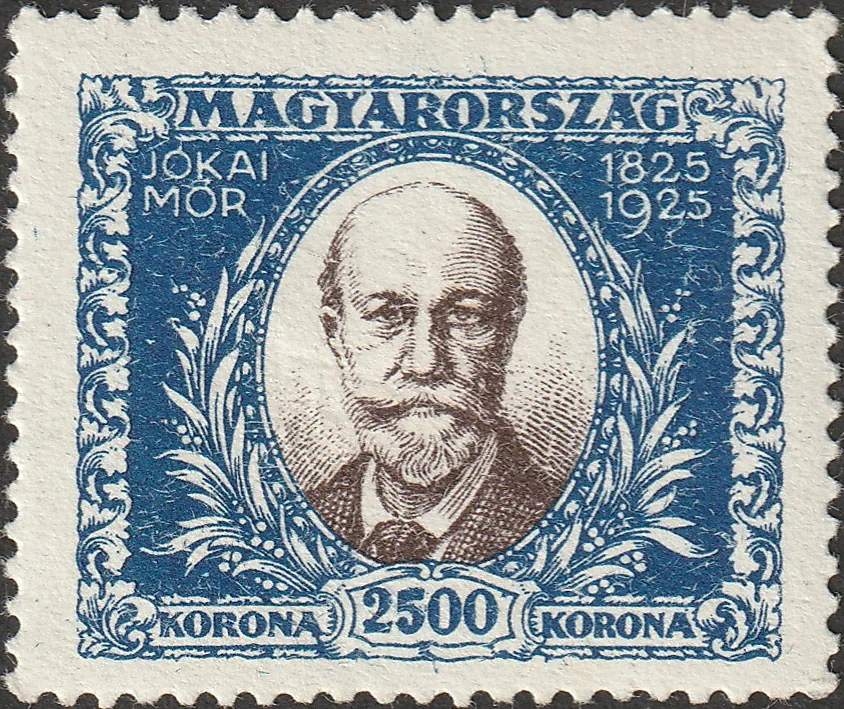
Offset printing was first used for a Hungarian stamp in 1923, for the Petőfi issue. As letterpress was gradually phased out, a number of offset-printed issues appeared, including Jókai I, Sport I, the 1929 Postage Due issue, and the Horthy and Saint Emeric series. Later, photogravure became the dominant modern process and offset was used less frequently for a time. From the late 1960s it became increasingly common again, and by the mid-1970s it had developed into one of the principal methods of Hungarian stamp production.

Many modern stamps are printed by four-colour offset. The CMYK process uses four inks: C for cyan, M for magenta, Y for yellow and K for black. Different combinations and screen densities of these inks create the colours perceived by the eye. CMYK is a subtractive colour system: the inks absorb portions of the incident light, and the reflected light produces the resulting colour.
