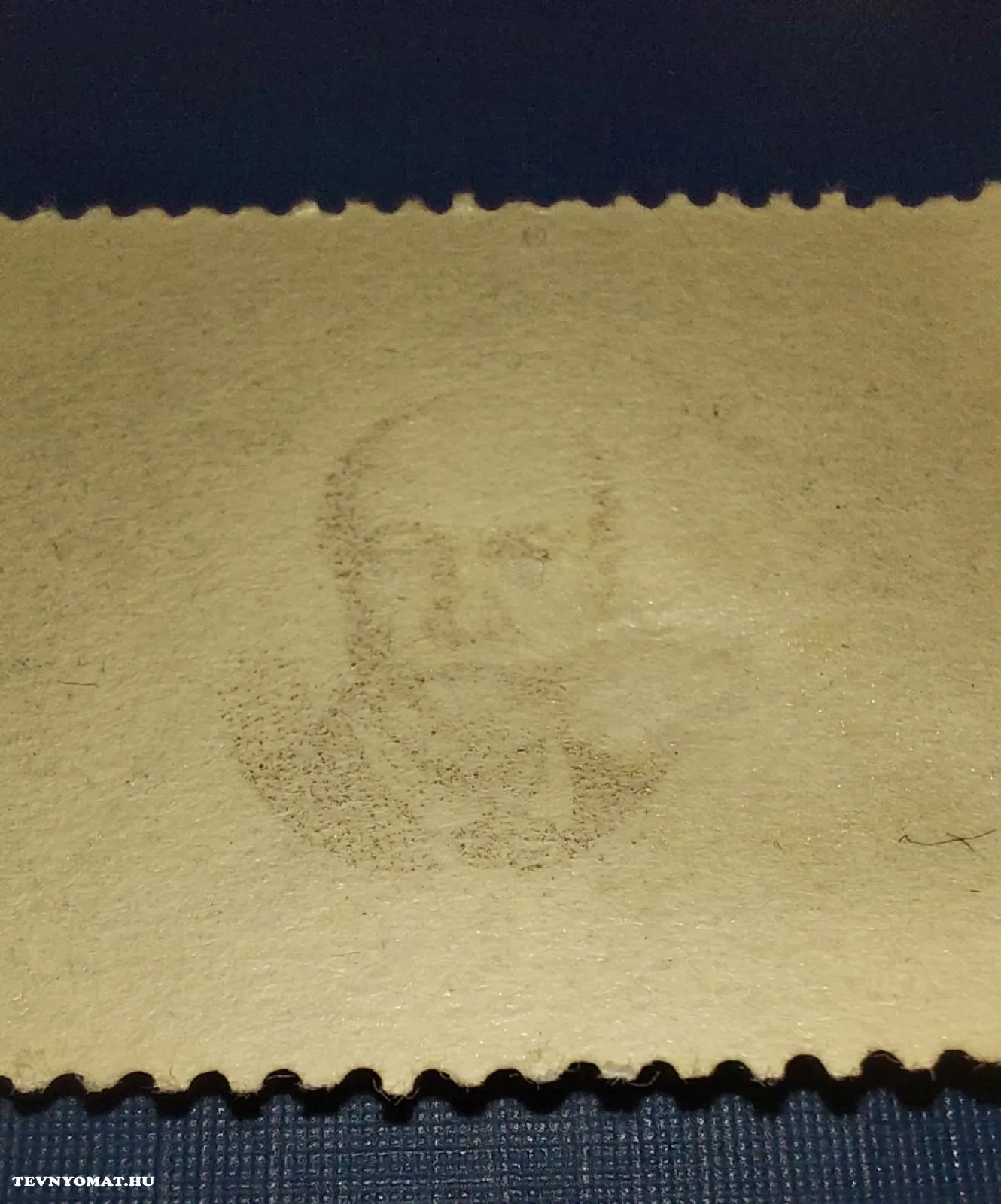
An offset impression is a mirror-image ink transfer appearing on the reverse of a stamp. Depending on how it is produced, several forms can be distinguished, including machine offset, sheet offset and sheet-to-machine offset.
Machine offset
A machine offset occurs when the press makes an impression without a sheet of paper in place, causing the inked stamp design to transfer to the impression surface, such as the cylinder or platen. The reverse of the next sheet then picks up this ink. A machine offset is normally mirror-imaged, paler than the normal printed design and positioned directly opposite it.
Partial machine offset may also occur when a folded sheet, incomplete sheet or another production irregularity allows ink to reach only part of the impression surface and then transfer to the reverse of the following sheet.


Sheet offset
A sheet offset is produced after printing rather than during the printing stroke itself. If the ink on a freshly printed sheet has not dried completely, the reverse of the next sheet placed on top may pick up part of the image. The transferred image is usually displaced in relation to the normal design, may affect only part of the sheet and can appear smeared in one direction if the sheets slide against one another.
Sheet-to-machine offset
A sheet-to-machine offset is a transfer impression involving another printed sheet. If a freshly printed sheet becomes stuck in the press, the reverse of the following sheet may press against its still-wet ink and pick up the image. In relief printing, this can sometimes be distinguished from a normal machine offset or sheet offset, particularly when the stuck sheet was slightly displaced.