
An inverted print is a rare and striking error in multistage printing. It occurs when the sheet is inserted into the press upside down during one printing phase, causing one part of the design or an overprint to appear inverted.
Hungary’s best-known major error, the Inverted Crowned Madonna was created in this way. On one sheet of the 5,000-korona value, the central Madonna vignette was printed upside down within the already completed frame. Because the overall design is nearly symmetrical, the error was not immediately obvious during inspection and the sheet entered circulation. The Inverted Crowned Madonna is one of the best-known and most valuable rarities of Hungarian philately.

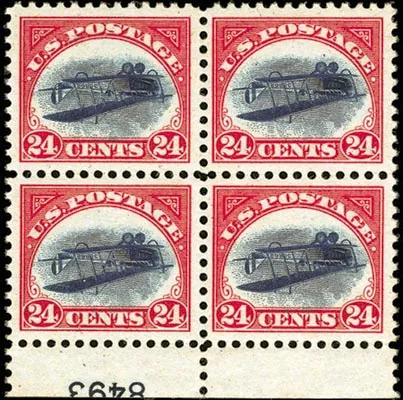
Many famous inverted errors are also known from other countries. Examples include the United States Inverted Jenny and the German Empire 5-mark stamp depicting Kaiser Wilhelm II with an inverted centre.

Inverted overprints are much more common. In such cases, an inscription or design added later to an already printed stamp appears upside down, usually because the sheet was placed in the overprinting press in the wrong orientation.
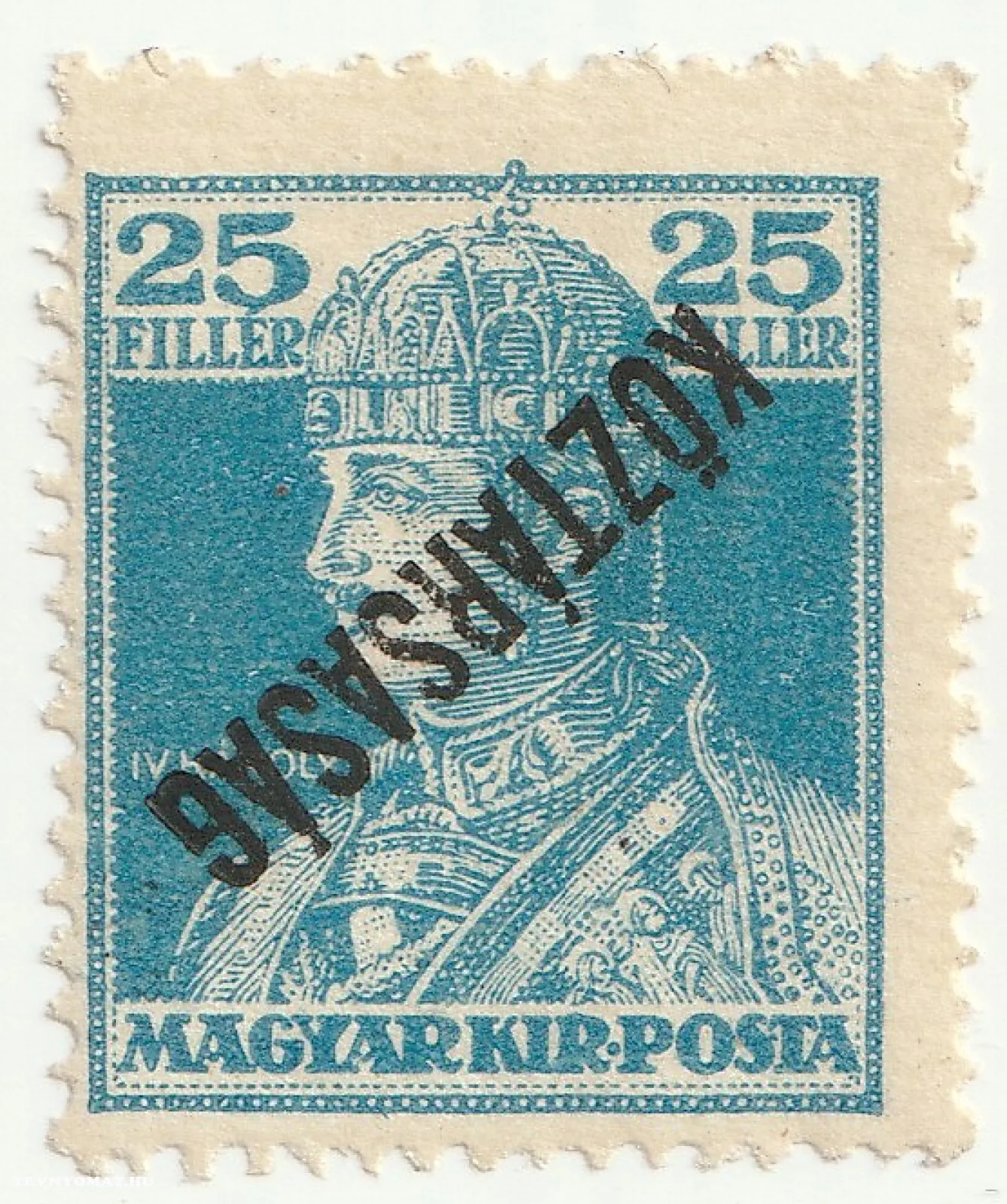
In 1918, after the proclamation of the republic, stamps depicting the monarch were overprinted KÖZTÁRSASÁG (“Republic”). Some sheets were fed into the press upside down, producing inverted overprints.
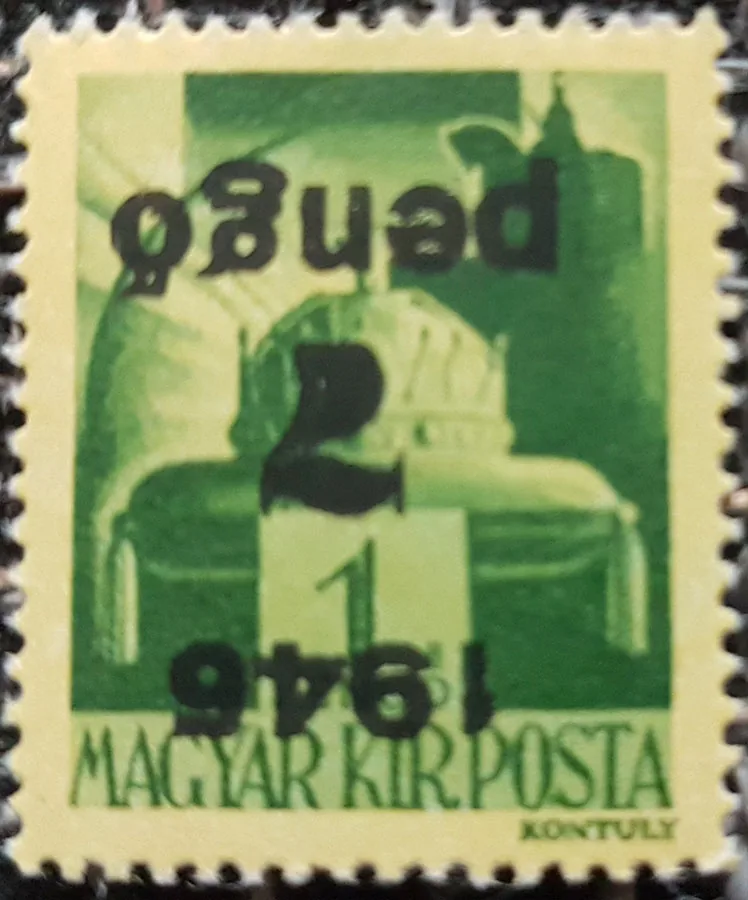
Warning: overprinted stamps are frequently forged. For valuable examples, expert authentication is strongly recommended.